
电线电阻与电压降
单位长度电线电阻、电压降计算和导体选型。
electricalwireresistance计算器
概述
Engineering ToolBox — 工程技术应用的设计与工程资源、工具和基础信息!
电线电阻决定电流流过导体时损失多少电压。为电路选择正确的线规取决于允许的电压降、导体材料、导线长度和工作温度。本页面涵盖关键公式、常见线径的参考电阻值和实用设计指南。
下载并打印电线电阻图。
关键公式
导体的电阻:
电压降(单相,单向):
电压降(单相,往返):
温度 T 下的电阻:
变量
| 符号 | 说明 | 单位 |
|---|---|---|
| R | 电阻 | Ω |
| ρ | 导体材料电阻率 | Ω·m |
| L | 导体长度 | m |
| A | 横截面积 | m² |
| I | 电流 | A |
| ΔV | 电压降 | V |
| α | 电阻温度系数 | 1/°C |
| T | 工作温度 | °C |
| R₂₀ | 20 °C 下的电阻 | Ω |
计算器
导线电阻与电压降
Conductor Resistivity
10 行
材料 | 电阻率 (Ω·m) | (1/°C) |
|---|---|---|
| Copper (annealed) | 1.72e-8 | 0.00393 |
| 铝 | 2.82e-8 | 0.00403 |
| Brass | 6.4e-8 | 0.0015 |
| Constantan | 4.9e-7 | 0.00002 |
| Gold | 2.44e-8 | 0.0034 |
| Nichrome | 0.0000011 | 0.0004 |
| Platinum | 1.06e-7 | 0.00392 |
| Silver | 1.59e-8 | 0.0038 |
| Tungsten | 5.6e-8 | 0.0045 |
| Steel | 1.43e-7 | 0.003 |
来源: engineeringtoolbox.com
AWG Wire Resistance
12 行
面积 (mm²) | 电阻 (Cu) (Ω/km) | |
|---|---|---|
| 18 | 0.823 | 20.95 |
| 16 | 1.31 | 13.17 |
| 14 | 2.08 | 8.286 |
| 12 | 3.31 | 5.211 |
| 10 | 5.26 | 3.277 |
| 8 | 8.37 | 2.061 |
| 6 | 13.3 | 1.296 |
| 4 | 21.2 | 0.815 |
| 2 | 33.6 | 0.513 |
| 1/0 | 53.5 | 0.322 |
| 2/0 | 67.4 | 0.256 |
| 4/0 | 107 | 0.161 |
来源: engineeringtoolbox.com
Resistance vs Temperature for Copper
铜 电阻 Multiplier vs 温度
单位换算器
Electrical 导线 电阻 单位 转换器
Interactive Wire Resistance Chart
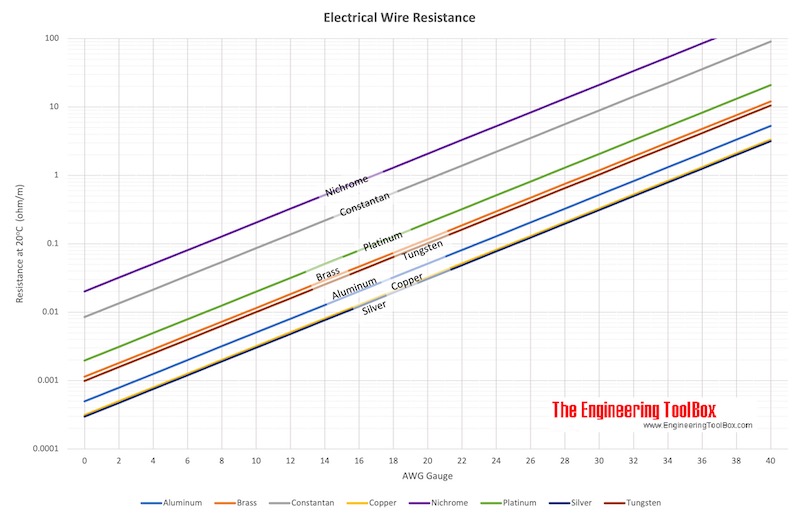
Electric 导线 电阻 - AWG 线规
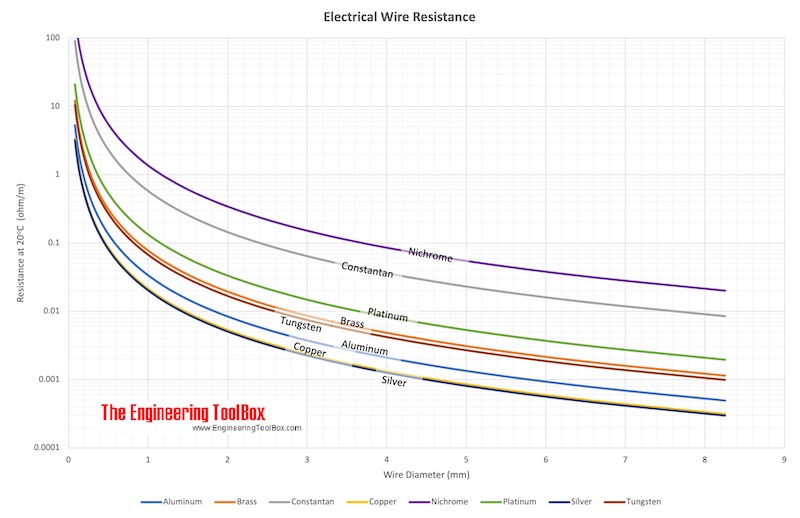
Electric 导线 电阻 vs 直径
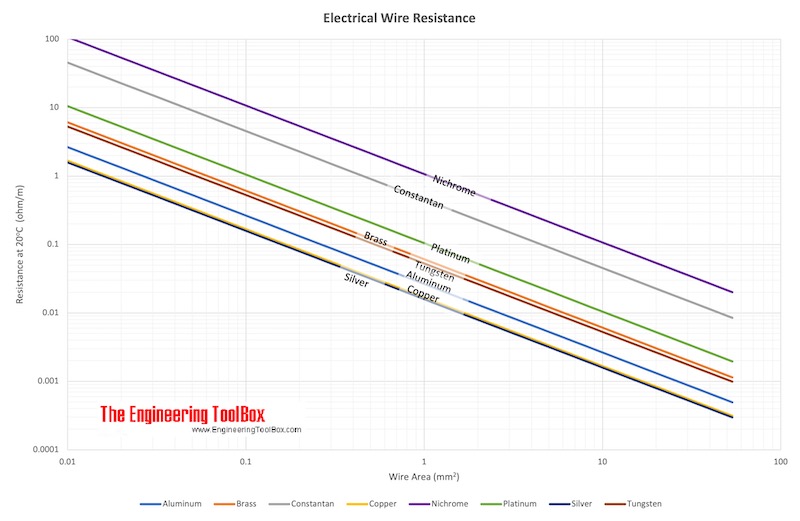
Electric 导线 电阻 vs Cross-Sectional 面积
原始源图
以下原始来源图像予以保留,以免丢失视觉参考资料。当图像包含图表或表格数据时,其提取值已呈现在页面的表格、计算器或交互式图表中;其余图像保留为视觉来源参考。
工程要点
- Voltage drop limits: National electrical codes commonly limit voltage drop to 3 % on branch circuits and 5 % total (feeder plus branch). Always verify local requirements.
- Temperature correction: Wire resistance increases roughly 0.4 % per °C rise for copper. At elevated operating temperatures, apply the temperature correction formula or the chart factor above.
- Aluminum vs copper: Aluminum has about 61 % the conductivity of copper, so an aluminum conductor needs roughly 1.6 times the cross-sectional area to match copper resistance.
- Skin effect: At higher frequencies, current crowds toward the conductor surface, effectively increasing resistance. The values above apply to DC or low-frequency (50/60 Hz) power distribution for solid conductors.
- Parallel conductors: When multiple conductors share a load in parallel, ensure equal lengths and terminations to avoid uneven current sharing.
- Stranded wire: Total cross-sectional area determines resistance regardless of strand count; stranded wire has the same resistance as a solid wire of equal total area.