
截面慣性矩 — 常見截面
常見截面的截面慣性矩公式和數值。
areamomentinertia
概述
截面慣性矩(亦稱面積二次矩)是描述截面抵抗彎曲能力的幾何性質。它只取決於形狀與尺寸,與材料無關。
慣性矩越大,梁的剛性越高,承受荷重時越能抵抗撓曲與應力。工程師在梁設計、柱尺寸選定、橋梁分析,以及任何重視抗彎剛度的應用中都會使用此性質。
原始頁面將本頁標示為截面慣性矩 — 典型截面 II,並連回典型截面的截面慣性矩 I,以提供另一組標準截面公式。
關鍵公式
彎曲公式 — 說明彎曲應力與慣性矩的關係:
平行軸定理 — 將慣性矩移轉至任一平行軸:
彈性截面模數 — 說明慣性矩與最外緣纖維應力的關係:
簡支梁承受均佈荷重時的最大撓度:
變量
| 符號 | 說明 | 單位 |
|---|---|---|
| 截面慣性矩 | m⁴ | |
| 彎曲應力 | Pa | |
| 彎矩 | N·m | |
| 至中性軸的距離 | m | |
| 截面積 | m² | |
| 平行軸之間的距離 | m | |
| 彈性截面模數 | m³ | |
| 從中性軸到最外纖維的距離 | m | |
| 每單位長度的分佈荷重 | N/m | |
| 梁跨距 | m | |
| 彈性模數 | Pa | |
| 撓度 | m |
常見截面公式
5 行
| 矩形(b × h) | b·h³/12 | h·b³/12 |
| 實心圓(直徑 d) | π·d⁴/64 | π·d⁴/64 |
| 空心圓(外徑 D、內徑 d) | π(D⁴−d⁴)/64 | π(D⁴−d⁴)/64 |
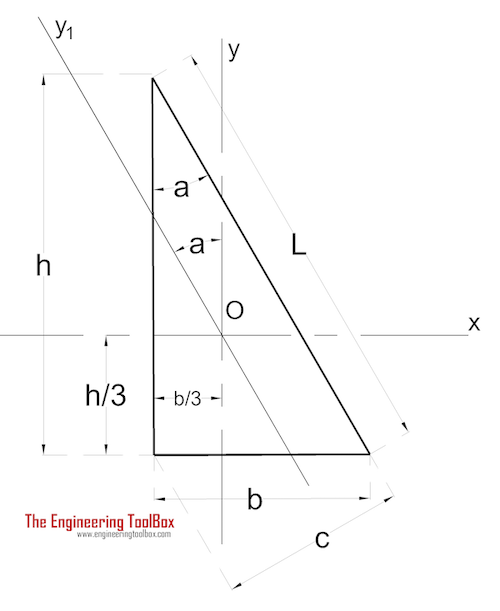
| 直角三角形(底 b、高 h) | b·h³/36 | h·b³/36 |
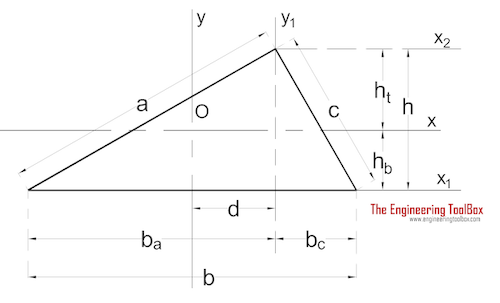
| 一般三角形(底 b、高 h) | b·h³/36 | h·b(b²−ba·bc)/36 |
來源: engineeringtoolbox.com
矩形截面慣性矩
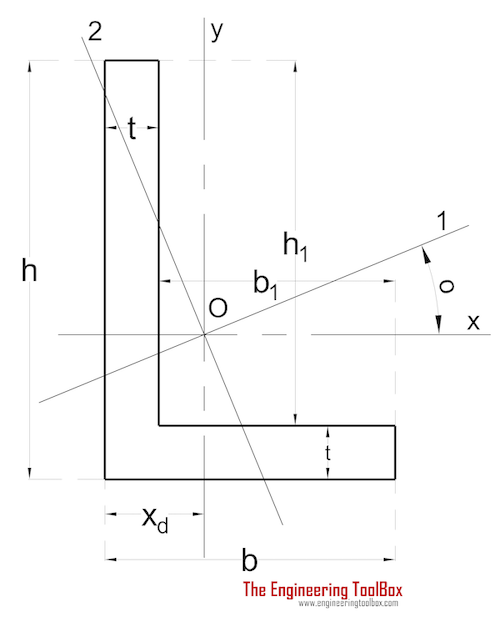
等邊角鋼
對兩邊長度均為 、厚度均勻為 的 L 形截面:
其形心偏移量為:
等邊角鋼的截面慣性矩
不等邊角鋼
對高度為 、寬度為 、厚度為 的 L 形截面:
形心距離為:
其中,,。
不等邊角鋼的截面慣性矩
三角形
對底為 、高為 的一般三角形:
對直角三角形(90° 角),公式可簡化為:
三角形截面慣性矩
單位換算器
截面慣性矩單位換算器
原始源圖
以下保留原始來源圖片,以免遺失視覺參考資料。若圖片含有圖表或表格資料,其擷取值會呈現在頁面的表格、計算器或互動式圖表中;其餘圖片則保留作為視覺來源參考。

來源表格說明
快取的來源頁面除截面公式與圖示外,還包含一個非工程資料的搜尋/導覽表格。為嚴格保留來源,偵測到的介面/搜尋資料列重現於下方;這些並非截面慣性矩資料。
工程要點
- 與材料無關。 截面慣性矩是純粹的幾何性質。不同材料但截面相同的兩根梁具有相同的 I。
- 將材料配置在遠離形心處。 相較於外形尺寸相同的實心截面,空心截面(管材、I 型梁、槽鋼)能以較少材料達到較高的 I。
- 強軸與弱軸。 多數截面的 與 不同,設計時必須檢查繞兩軸的彎曲。
- 平行軸定理對組合截面至關重要。 將截面拆分為簡單形狀,計算各部分通過形心軸的 I,再移轉至共同軸。
- 單位。 SI 制的慣性矩以 mm⁴ 或 m⁴ 表示,常見鋼材表則使用 cm⁴。代入應力或撓度方程式前,務必確認單位一致。
- 標準表格。 熱軋鋼型材(W、S、C、L、HSS)應查閱 AISC 或製造商資料,不宜手動計算 I。
參考資料
- Engineering ToolBox — 截面慣性矩
- Gere, J.M. Mechanics of Materials, Cengage Learning.